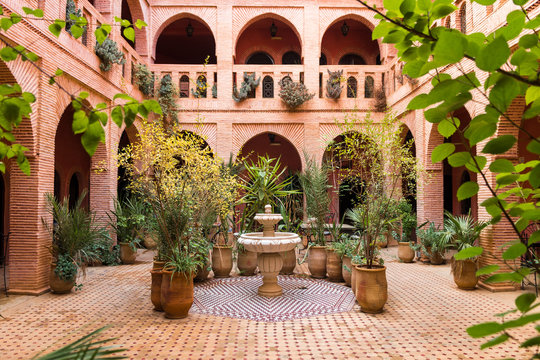
Foreigners can buy urban property such as riads and villas in their own name; agricultural land is the restricted category. But the right to buy is the easy part. What matters is how the property is held. Some properties carry a clean registered title (what's known here as the titre foncier); others are held on older, traditional deeds that may need to be converted and registered before they're truly secure. Knowing which you're looking at — and what it takes to convert it — changes everything about the risk and the timeline.
A signature is not the same as clean ownership. Older medina properties pass through families, and a sale can require every heir to agree and sign — miss one and the deal isn't whole. You want the full chain of ownership, no undeclared liens, and documents that match each other and reality. Incomplete paperwork is the quiet reason a "done" deal unravels months later.
This is the one that catches people. With some property types, the registered footprint and boundaries don't match what's actually built — a rooftop terrace that was never declared, a room extended over a neighbour's airspace, a shared wall no one can quite account for. The risk varies a great deal by the type of property and where it sits, and it's invisible to an outside buyer falling for the light in a courtyard. It is very visible to someone who knows what to check.
Sequence protects you. Broadly:
People plan the purchase and never plan the exit. Morocco has currency controls, and the time to think about repatriating your proceeds is the day you buy, not the day you sell. Foreign-currency investment that is properly declared and recorded at purchase can generally be repatriated later — capital and gains — but only if it was structured correctly from the start. That is why I bring in the right accountant on day one, not as an afterthought. It's the single most valuable thing a good adviser does and the thing the listing sites never mention.
| A riad (medina) | A villa (palmeraie / outside) | |
|---|---|---|
| Character | Singular, historic, the real Marrakech | Space, garden, pool, privacy |
| Title & footprint risk | Higher — older deeds, extensions, shared walls | Often cleaner, newer registration |
| Access | Often foot-only through the derb | Drive to the door |
| Restoration & upkeep | High — craft trades, humidity, the fountain | Moderate — garden + pool |
| Best for | A romance, a guesthouse, a project of love | Family life, low fuss |
None of this is a reason not to buy. Marrakech is full of people who bought beautifully and never looked back. It's the reason to buy with someone beside you who knows the laws, reads the paperwork, sees the footprint, runs the order of operations, and has your accountant in the room before the romance takes over. That is the part I do.
Buying before you understand the local laws — the titling, the completeness of the paperwork and ownership, the footprint risks, the order of operations, and how you'll get your money out later. The property is the easy decision.
Yes — urban property like riads and villas, in your own name. Agricultural land is the restricted category. The title and the structure of the deal matter far more than the right to buy.
Plan it before you buy. Foreign-currency investment that's properly declared and recorded at purchase can generally be repatriated on sale, gains included — but only if it was done correctly from the start. Get the right accountant in on day one.
I'll read the title and the paperwork, check the footprint, run the right order of operations, and have the accountant in the room from the start — through the notary and the keys.
Ask Sakine →We respect your privacy.